
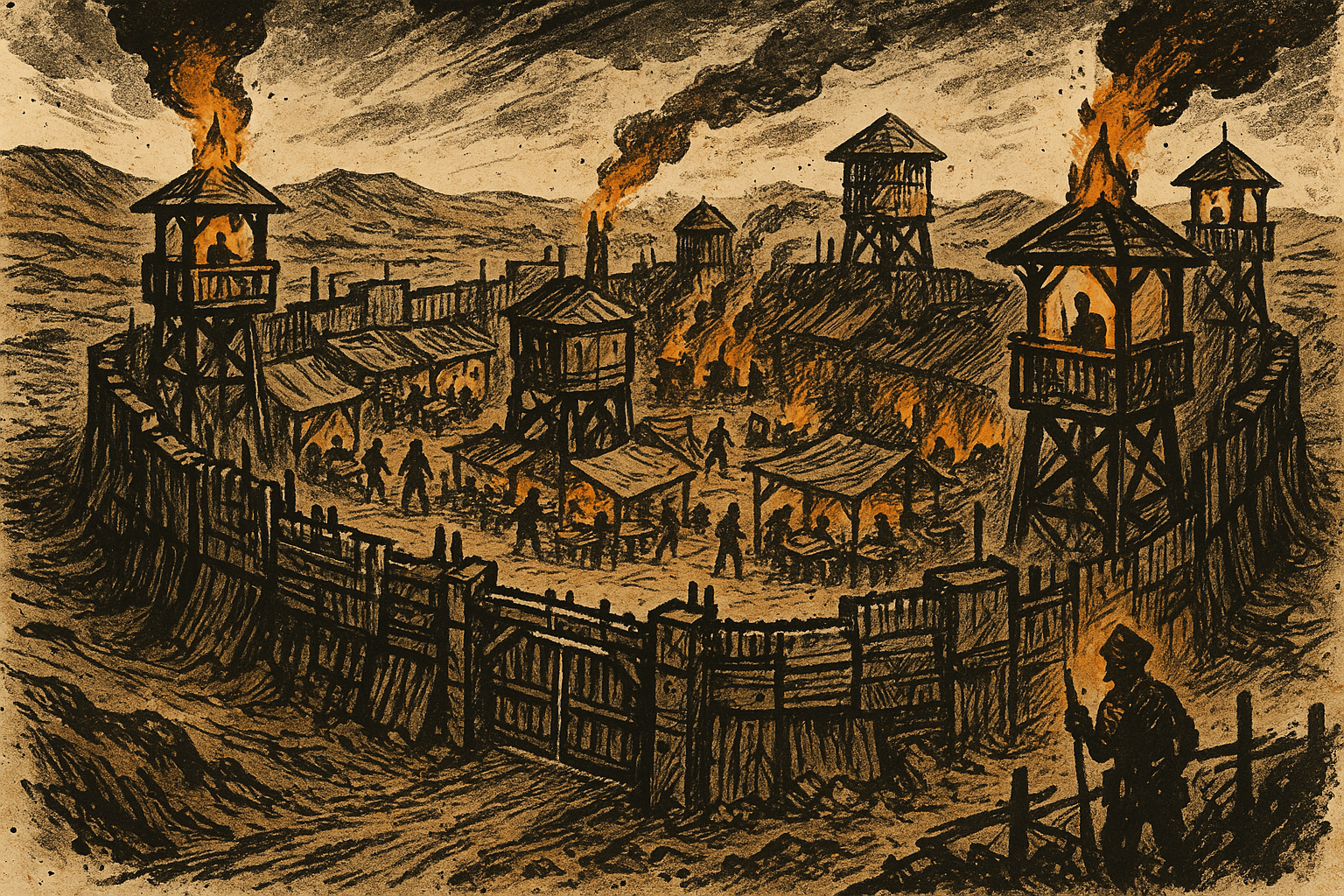
Player's Guide
Everything you need to sit down and play your first session in the wasteland.
What Makes Ashfall Different
If you're coming from other RPGs, here's what to expect.
Death Is Real
Characters can die. That's not a bug — it's what makes every decision feel like it matters.
Resources Matter
Ammunition, medical supplies, clean water. Track them. When the party counts their last magazine, that's Ashfall at its best.
Recovery Is Slow
Short rests take 8 hours. Long rests take a full week. You can't power through a ruin by resting after every fight.
Magic Is New
Magic emerged after the apocalypse. It's raw, feared, and barely understood. Casters are pioneers, not professors.
Chrome Costs Humanity
Cybernetic augmentations make you stronger, but they erode your connection to magic. Choose: reliable tech or volatile power.
You Can Try Anything
Combat is one option, never the only one. Sneak, negotiate, hack, collapse the tunnel. The wasteland rewards creativity.
If you love Fallout, Mad Max, The Road, or Metro 2033 — this is your game.
What You Need to Play
TTRPGs are beautifully low-maintenance. Three things. That's it.
Dice
A set of polyhedral dice — d4, d6, d8, d10, d12, and d20. A free digital dice roller works too.
Pencil & Paper
Something to write on. Track your character, your gear, and your choices.
Creating a Character
Character creation follows five straightforward steps. The full rules are in the Character Creation chapter.
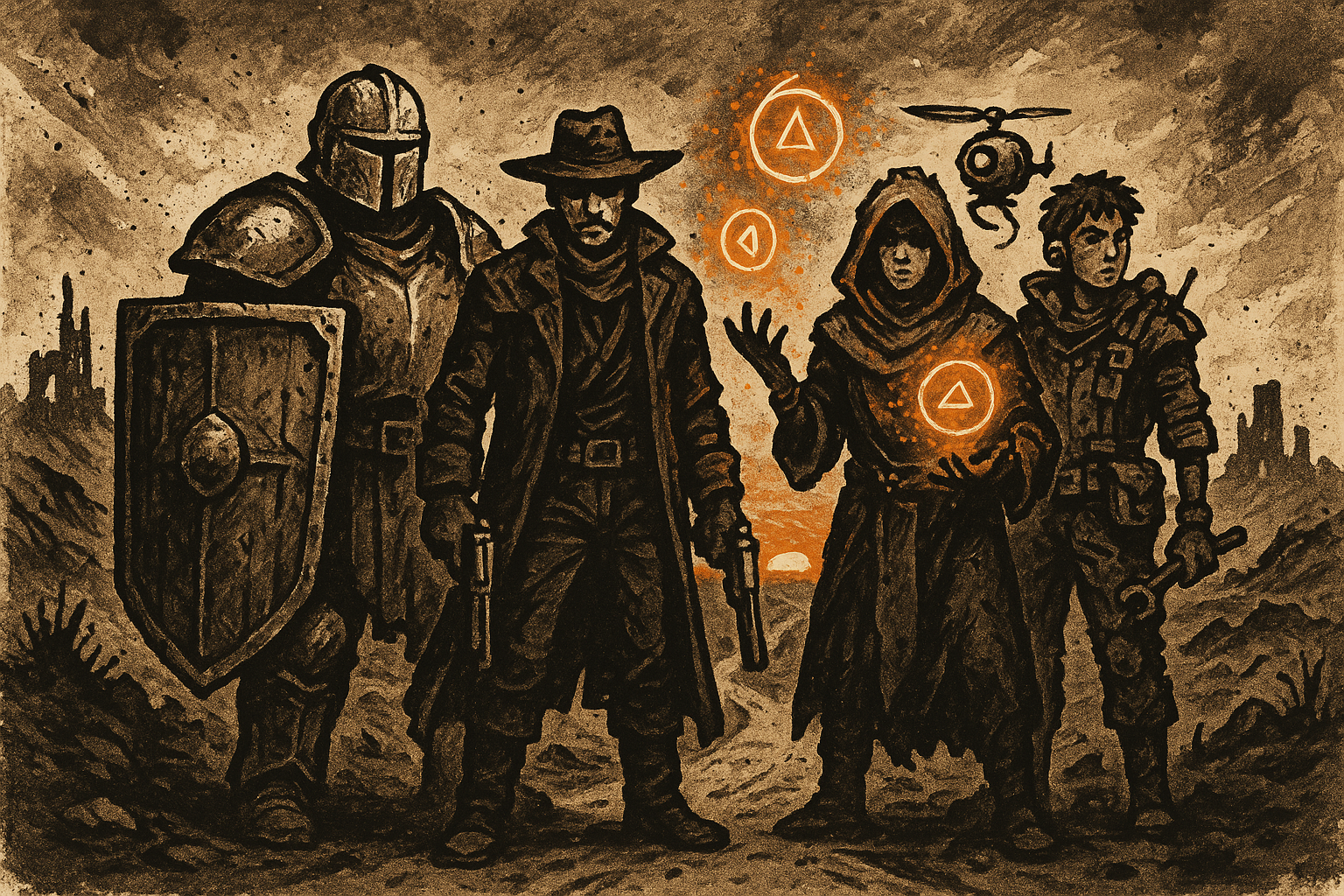
Six attributes — Might, Agility, Endurance, Intellect, Wisdom, Presence — define your core capabilities.
Humans are the most common survivors, but the wasteland has changed some people in unexpected ways.
Your life before (or after) The Fall shapes your starting skills and narrative hooks.
Ashfall has 8 archetypes, each with distinct mechanics and playstyles — from the frontline Warrior to the reality-bending Channeler.
Choose from the equipment list. In the wasteland, your loadout can mean the difference between survival and a shallow grave.
Understanding Combat
Three key concepts to know before your first fight.
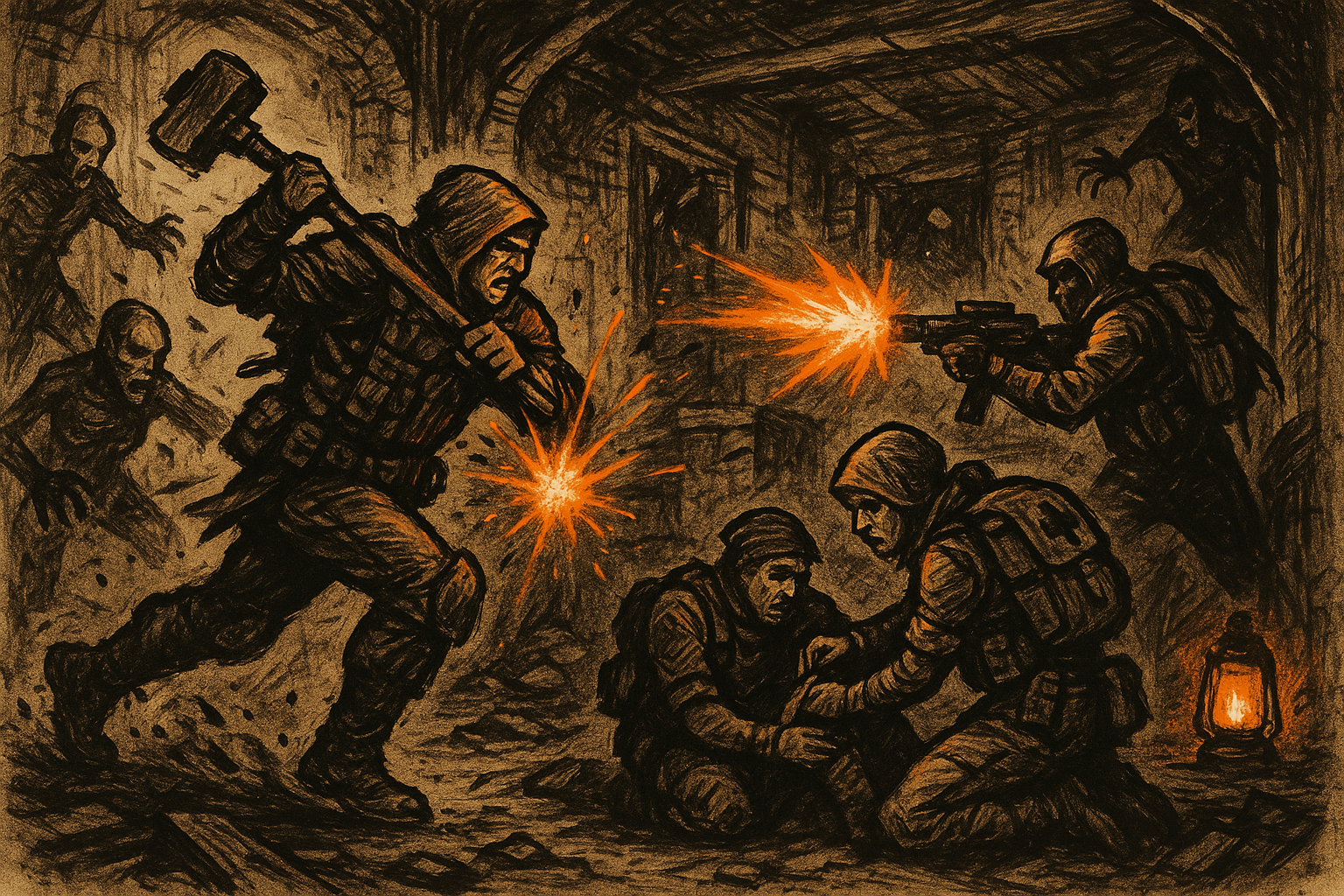
3-Action Economy
Each turn you get a Move, a Strike, and a Bonus Action. No dead turns — every class has meaningful options every round.
Combat Rules →Bounded Lethality
Bonuses cap at +18. Even high-level characters respect a well-armed raider squad. The wasteland never gets safe.
Combat Rules →Gritty Rests
Short rests take 8 hours. Long rests take a full week. Resource management is survival — every bullet and bandage counts.
Exploration Rules →What Play Looks Like
A quick snapshot of the GM-player loop in action.
Pick Your Character
Two ways to get a character in your hands.
Common Questions
Answers to what new players actually ask.
Do I need to know all the rules?
Not at all. Your job is to describe what your character tries to do — "I want to sneak past the sentry" or "I shoot at the raider" — and the GM handles which rules apply. You'll pick up the mechanics naturally as you play.
Do I need to do a voice?
No. Saying "my character tries to talk the merchant into lowering the price" works just as well as acting it out. Play at whatever level of immersion feels comfortable.
How is this different from D&D?
Grittier and deadlier. Resources like ammo and medical supplies matter. A short rest takes 8 hours and a long rest takes a full week. Magic is new and feared. The tone is survival-first, heroics-second.
Can my character die?
Yes, and that's by design. The real threat of death is what makes every decision feel like it matters. If your character dies, you create a new one and the GM works them into the story.
What if I've never played a TTRPG?
Ashfall is a great place to start. The core of play is simple: describe what your character does, roll a d20 when the outcome is uncertain, add a modifier. In combat you get three actions per turn, so you always know your options.
How long does a session take?
Most groups play 2-4 hours. Some sessions are all tense negotiation with no combat; others are one long firefight. Both are normal.
Can I play online?
Absolutely. Voice chat, a free dice roller, and optionally a VTT like Foundry or Roll20. Ashfall works just as well over a screen as around a table.
What's the deal with magic and augmentations?
Augmentations are reliable tech upgrades. Magic is volatile but powerful. The catch: every augmentation erodes your Humanity score, making magic harder to use. You can lean into one, dabble in both, but mastering both isn't possible.
What archetype should I pick first?
Whatever sounds fun. Warrior and Gunslinger are straightforward fighters. Medic and Technician support the group. Operative and Diplomat solve problems outside combat. Mystic and Channeler use magic — more complex but rewarding.
Ready to Dive In?
The wasteland is waiting. Read the rules or start building your survivor.